Buying Versus Leasing

For most of us, the issue of whether to buy or lease our car or truck comes up at least once throughout our motoring journey. Vehicle procurement is often a daunting investment, especially when it comes to costly capital equipment such as a work truck.
Should you buy outright, or would the smarter option be to lease? And what’s the real difference between buying and leasing? Whichever way you lean, you want to make the right the decision based on your situation, and, importantly, save yourself some cash throughout the process. What do the terms “leasing” and “buying” actually mean? According to business.gov.au, leasing lets you borrow a vehicle under a contract, and buying lets you own the vehicle. Straightforward enough to be sure, but what actually goes into leasing and buying? Leasing pros and cons
| Pros | Cons |
| Minimal cash needed upfront A lease requires a very small deposit to get you on the road. This will vary from place to place, but it can range from one or two months’ upfront payment to no deposit at all. | Credit woes If you don’t have a good credit history, you may not get approval for a lease. Also, leasing can end up costing as much as getting a bank loan when you factor in monthly repayment and other related fees. |
| Your lease can be labelled as a business expense If you have a good tax accountant who is on top of all your business expenses, leasing could provide some tax relief. | The vehicle isn’t yours You can’t list the vehicle as an asset and there are restrictions on what you can or can’t do with the vehicle. At the end of the day, it’s not really yours. |
| Upgrade When your lease is up (typically in a few years), you can upgrade to a newer model. | Terms and conditions Many leasing contracts restrict what you can do with the vehicle, such as the number of kilometres you can drive. You might also be forced to make payments for the entire lease period even if you aren’t using the equipment. If you decide to cancel the contract, a large early termination fee may apply. |
| Pros | Cons |
| The vehicle is yours You own the vehicle, meaning you can do whatever you want to it—making any and all of the vehicle customisations necessary for your business, driving however many kilometres you need to etc. | Maintenance Because you own the vehicle, all vehicle-related expenses such as servicing and repairs will have to be borne by you, unless your vehicle is under warranty or you have service agreements, such as Isuzu’s Priority Service Agreements. |
| Asset Because you’ll own the vehicle, it becomes an asset that you can sell. | Larg(er) upfront costs Whether you’re paying for it in one lump sum payment or getting a bank loan (which needs a sizeable deposit from your end), the upfront costs are larger than if you were to lease. |
| Selling You have the freedom to sell whenever you want or need to. | Depreciation As soon as you start building up that odometer, the value of your vehicle begins to decrease. |

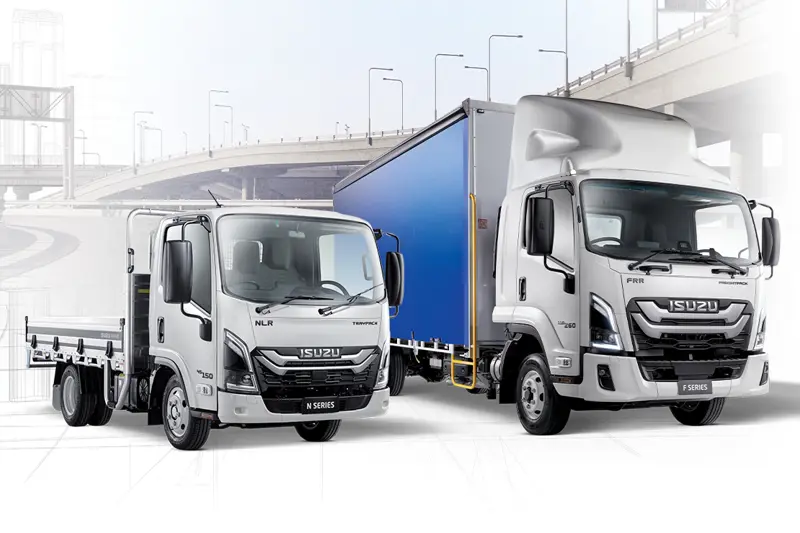
Reliability redefined.
The all-new range of Isuzu trucks has arrived. With a sleek new cab design, more advanced safety features and a smoother, more comfortable drive, the new range will change the way we rely on our trucks. Forever.
Learn more
Subscribe
Want all the latest Isuzu news?
Stay up to date with the latest on Isuzu and dealerships near you.