Chain Of Responsibility Changes: What You Need To Know

For a good part of this year, everyone working within the freight and logistics supply chain has been anticipating changes to Chain of Responsibility (CoR) processes.
And since it was made official in October, we thought we’d give you a run down of the new changes introduced to the Heavy Vehicle National Law (HVNL), and provide answers to some common questions around it. What is CoR? Here’s what you already know about CoR – that it matters to everyone within the supply chain (including you). But how does the CoR impact the transport industry? And more importantly – what does it actually mean? Chain of Responsibility is a legal obligation put in place to ensure that everyone within the transport supply chain shares responsibility for any breach in the HVNL. What that means is, anybody within the transport supply chain with some influence over or control of any on- and off-road activity is equally responsible to comply with the HVNL. This legal obligation not only works to minimise risks across the supply chain and increase safety for all parties involved, it also encourages positive and responsible attitudes about safety more broadly. Who is this applicable to? This is an easy one – as mentioned above, everyone within the transport supply chain is legally obligated to comply with CoR. More specifically, the supply chain constitutes the following personnel:
- An employer of a driver.
- A prime contractor for a vehicle if the vehicles driver is self-employed.
- An operator of the vehicle.
- A scheduler for the vehicle.
- A loading manager for any goods in the vehicle.
- A loader and/or unloader of a vehicle.
- A consignor of any goods for transport by the vehicle.
- A consignee of any goods in the vehicle.
- A loader and/or unloader of any goods in the vehicle.
 A common example of when CoR becomes applicable is if a load is not securely restrained, causing risk to the driver, traffic and road users.
Another example of when CoR comes into the picture is when instructions or actions by people within the supply chain violate HVNL – this also covers any actions or influences that may have directly or indirectly had an effect on compliance.
What are the legislative changes to CoR?
Taking into consideration the above, there’s been a number of changes have been introduced towards the end of 2018, including penalties for non-compliance. The changes have been broken up into the following categories…
A common example of when CoR becomes applicable is if a load is not securely restrained, causing risk to the driver, traffic and road users.
Another example of when CoR comes into the picture is when instructions or actions by people within the supply chain violate HVNL – this also covers any actions or influences that may have directly or indirectly had an effect on compliance.
What are the legislative changes to CoR?
Taking into consideration the above, there’s been a number of changes have been introduced towards the end of 2018, including penalties for non-compliance. The changes have been broken up into the following categories…
- New primary duty
- Identify, assess and control risks.
- Maintain compliance in terms of fatigue, speed, restraining loads.
- Conduct reporting and maintain records of safety management methods put in place.
- Executive liability
- Penalties
- Category 3 offence: includes breaches of safety duty with a penalty of $50,000 for an individual or $500,000 for a corporation.
- Category 2 offence: includes risks of death/injury and amounts to a penalty of $150,000 for an individual or $1.5m for a corporation.
- Category 1: includes recklessness and amounts to five years of imprisonment, a penalty of $300,000 for an individual or $3m for a corporation.
- Those responsible for scheduling and rostering drivers
- Those responsible for managing driver fatigue
- Those responsible for managing packing, shipping, freight weights and restraining the load.
- Breaching fatigue management requirements
- Breaching speed limits
- Improperly restrained loads or failing to secure loads.
- Conducting regular checks of employees’ work schedules and maintaining records of fatigue management, speeds and restraining loads
- Conducting training to increase staff awareness of compliance and policies
- Ensuring the review of important commercial agreements
- Providing employees and staff with proper tools to help them maintain records of work schedules and loads carried
- Maintaining a training matrix that records employees’ licenses, medical tests etc.
- Thoroughly documenting practises within work environment to ensure the optimal working condition of trucks and vehicles.
 The main focus of these changes is to encourage a safe and healthy environment for staff and the public and strengthen general road safety through rigorous strategies and measures across all parties within the transport supply chain.
And it benefits businesses, too. By establishing proper procedures in accordance with the new legislation changes and prioritising employee safety, businesses and corporations can avoid accidents and improve efficiencies across their operations.
After all, every business wants to make sure that their staff gets home safely, and in essence the new changes to CoR make sure this is always the case.
If you found this blog interesting, then we think you might find our latest piece on restraining loads worth your time.
The main focus of these changes is to encourage a safe and healthy environment for staff and the public and strengthen general road safety through rigorous strategies and measures across all parties within the transport supply chain.
And it benefits businesses, too. By establishing proper procedures in accordance with the new legislation changes and prioritising employee safety, businesses and corporations can avoid accidents and improve efficiencies across their operations.
After all, every business wants to make sure that their staff gets home safely, and in essence the new changes to CoR make sure this is always the case.
If you found this blog interesting, then we think you might find our latest piece on restraining loads worth your time.

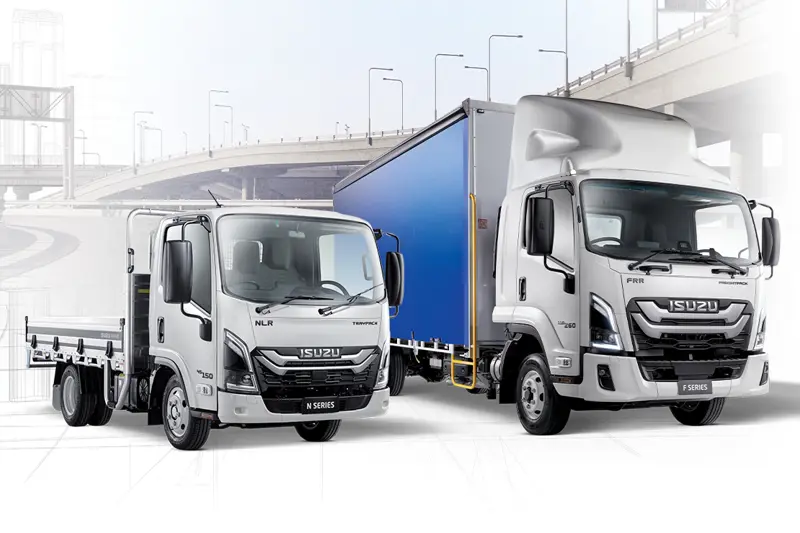
Reliability redefined.
The all-new range of Isuzu trucks has arrived. With a sleek new cab design, more advanced safety features and a smoother, more comfortable drive, the new range will change the way we rely on our trucks. Forever.
Learn more
Subscribe
Want all the latest Isuzu news?
Stay up to date with the latest on Isuzu and dealerships near you.