THE FUTURE OF EV IS ON ITS WAY

The future can be a long time in the making. The first crude electric motor was built in 1827 by Hungarian priest, Ányos Jedlik, and since then there have been a number of false starts on the way to creating a viable electric engine.
A Professor from the Netherlands, a Scottish inventor, and an American blacksmith were amongst those to have a go at it, with varying degrees of success, and their efforts weren’t all in vain.
In 1902, electric vehicles (EVs) even came off the Studebaker Automobile Company’s production line. But the timing was ill-fated. The arrival of Ford’s cheaper, assembly line, petrol-based vehicles swept electric vehicles to the side.
But even if Ford hadn’t arrived on the scene, there were still significant issues with electric engines, namely around power storage, costs and the distance an EV could cover.
This question of power storage and distance has been the stumbling block around the viability of EVs for over a century, and one we’re only just clearing.
 The Development
The 1990s saw car companies begin experimenting once again with the concept of electric motors, and several EVs were produced for California drivers.
However, the concept faced a number of regulatory hurdles, such as a federal court challenge to California’s zero-emissions mandate, and a federal law requiring spare parts to be produced for a small number of EVs.
Ultimately, the prohibitive cost and immature technology, notably around energy storage, meant the projects wound up in the early 2000s.
The future of the EV was once again under a cloud, until a confluence of factors turned things around.
The Renaissance
With greater focus on clean emissions and concern around peak oil from the beginning of the 2000s, both the regulatory framework and the economic case for EVs converged.
With a boost from huge leaps in battery technology, the viability of the EV finally got off the ground.
Whereas EVs had faltered in the market in the nineties, toward the end of the naughties some prescient thinkers saw demand for such a product and produced in scale. In 2015 200,000 units of the Leaf and 100,000 of the Tesla Model S were sold.
There was still an issue, however, particularly in regard to commercial vehicles like trucks. Was the technology fit for long distances and was it going to be cost efficient to produce?
The Development
The 1990s saw car companies begin experimenting once again with the concept of electric motors, and several EVs were produced for California drivers.
However, the concept faced a number of regulatory hurdles, such as a federal court challenge to California’s zero-emissions mandate, and a federal law requiring spare parts to be produced for a small number of EVs.
Ultimately, the prohibitive cost and immature technology, notably around energy storage, meant the projects wound up in the early 2000s.
The future of the EV was once again under a cloud, until a confluence of factors turned things around.
The Renaissance
With greater focus on clean emissions and concern around peak oil from the beginning of the 2000s, both the regulatory framework and the economic case for EVs converged.
With a boost from huge leaps in battery technology, the viability of the EV finally got off the ground.
Whereas EVs had faltered in the market in the nineties, toward the end of the naughties some prescient thinkers saw demand for such a product and produced in scale. In 2015 200,000 units of the Leaf and 100,000 of the Tesla Model S were sold.
There was still an issue, however, particularly in regard to commercial vehicles like trucks. Was the technology fit for long distances and was it going to be cost efficient to produce?
 The Technology & Growth
The electric engine of today is now a realistic proposal owing to innovations in energy storage, battery technology, and connectivity that allow vehicles to operate more efficiently and over vaster distances.
With higher energy and power density and a longer life span, the introduction of lithium ion batteries has provided an energy storage solution far superior to most other batteries.
Cost reduction has been a massive factor. EV battery pack costs reduced significantly between 2010 and 2016, while in that same period sales of EVs have increased at over 160 per cent per annum.
While it’s hard to project where the growth will lead, business consulting firm McKinsey suggests the eTruck market share will reach 15 per cent overall by 2030, while light-duty truck sales could climb as high as 25-35 per cent in Chinese and European markets.
Discerning if we are at the bottom of a J-curve and EV sales are set to grow exponentially is hard to predict, but adoption has grown faster than expected – and with air quality a significant issue in Chinese cities, China could provide a major impetus for growth.
The Technology & Growth
The electric engine of today is now a realistic proposal owing to innovations in energy storage, battery technology, and connectivity that allow vehicles to operate more efficiently and over vaster distances.
With higher energy and power density and a longer life span, the introduction of lithium ion batteries has provided an energy storage solution far superior to most other batteries.
Cost reduction has been a massive factor. EV battery pack costs reduced significantly between 2010 and 2016, while in that same period sales of EVs have increased at over 160 per cent per annum.
While it’s hard to project where the growth will lead, business consulting firm McKinsey suggests the eTruck market share will reach 15 per cent overall by 2030, while light-duty truck sales could climb as high as 25-35 per cent in Chinese and European markets.
Discerning if we are at the bottom of a J-curve and EV sales are set to grow exponentially is hard to predict, but adoption has grown faster than expected – and with air quality a significant issue in Chinese cities, China could provide a major impetus for growth.
 Australian Conditions
The vastness of the Australian continent means that eTrucks that can cover long distances are at a premium. But the need for light and medium duty trucks to cover ‘the last mile’, again and again, every day, within urban environments is also critical.
The reason for bullish appraisals on EV sales at the light end of the market is the distances they are able to travel without a recharge, with claims they can reach anywhere from 160 to 350 kilometres across a range of payload scales.
Isuzu Australia has commenced an electric vehicle concept program and will have more to say about this very soon.
Australian Conditions
The vastness of the Australian continent means that eTrucks that can cover long distances are at a premium. But the need for light and medium duty trucks to cover ‘the last mile’, again and again, every day, within urban environments is also critical.
The reason for bullish appraisals on EV sales at the light end of the market is the distances they are able to travel without a recharge, with claims they can reach anywhere from 160 to 350 kilometres across a range of payload scales.
Isuzu Australia has commenced an electric vehicle concept program and will have more to say about this very soon.

The Development
The 1990s saw car companies begin experimenting once again with the concept of electric motors, and several EVs were produced for California drivers.
However, the concept faced a number of regulatory hurdles, such as a federal court challenge to California’s zero-emissions mandate, and a federal law requiring spare parts to be produced for a small number of EVs.
Ultimately, the prohibitive cost and immature technology, notably around energy storage, meant the projects wound up in the early 2000s.
The future of the EV was once again under a cloud, until a confluence of factors turned things around.
The Renaissance
With greater focus on clean emissions and concern around peak oil from the beginning of the 2000s, both the regulatory framework and the economic case for EVs converged.
With a boost from huge leaps in battery technology, the viability of the EV finally got off the ground.
Whereas EVs had faltered in the market in the nineties, toward the end of the naughties some prescient thinkers saw demand for such a product and produced in scale. In 2015 200,000 units of the Leaf and 100,000 of the Tesla Model S were sold.
There was still an issue, however, particularly in regard to commercial vehicles like trucks. Was the technology fit for long distances and was it going to be cost efficient to produce?
The Technology & Growth
The electric engine of today is now a realistic proposal owing to innovations in energy storage, battery technology, and connectivity that allow vehicles to operate more efficiently and over vaster distances.
With higher energy and power density and a longer life span, the introduction of lithium ion batteries has provided an energy storage solution far superior to most other batteries.
Cost reduction has been a massive factor. EV battery pack costs reduced significantly between 2010 and 2016, while in that same period sales of EVs have increased at over 160 per cent per annum.
While it’s hard to project where the growth will lead, business consulting firm McKinsey suggests the eTruck market share will reach 15 per cent overall by 2030, while light-duty truck sales could climb as high as 25-35 per cent in Chinese and European markets.
Discerning if we are at the bottom of a J-curve and EV sales are set to grow exponentially is hard to predict, but adoption has grown faster than expected – and with air quality a significant issue in Chinese cities, China could provide a major impetus for growth.
Australian Conditions
The vastness of the Australian continent means that eTrucks that can cover long distances are at a premium. But the need for light and medium duty trucks to cover ‘the last mile’, again and again, every day, within urban environments is also critical.
The reason for bullish appraisals on EV sales at the light end of the market is the distances they are able to travel without a recharge, with claims they can reach anywhere from 160 to 350 kilometres across a range of payload scales.
Isuzu Australia has commenced an electric vehicle concept program and will have more to say about this very soon.
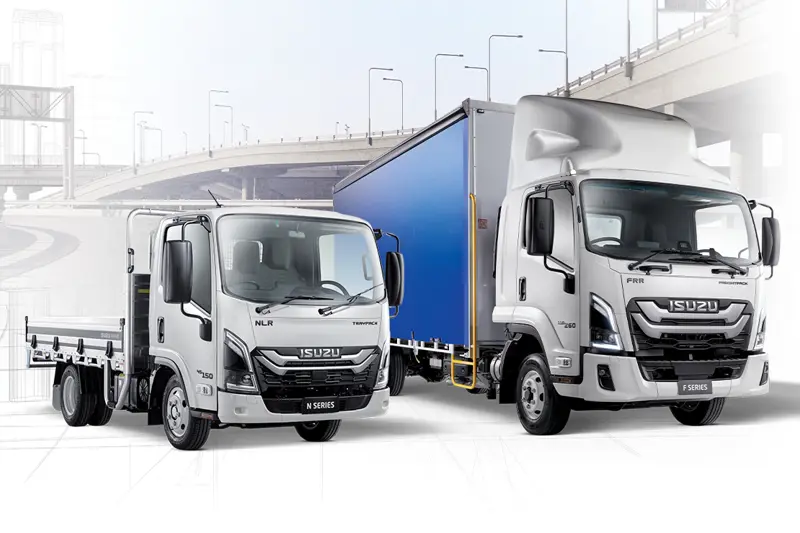
Reliability redefined.
The all-new range of Isuzu trucks has arrived. With a sleek new cab design, more advanced safety features and a smoother, more comfortable drive, the new range will change the way we rely on our trucks. Forever.
Learn more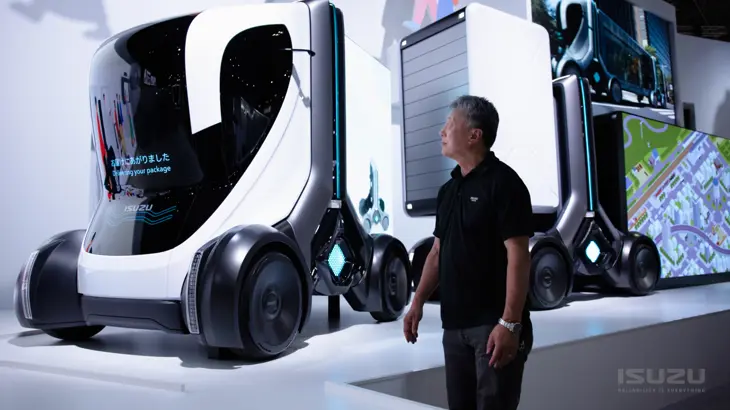
Subscribe
Want all the latest Isuzu news?
Stay up to date with the latest on Isuzu and dealerships near you.